We Tested 12 Budget Wireless Chargers and Half of Them Are Basically Lying to You

Wireless charging used to be a premium feature. Now you can grab a Qi pad at a gas station checkout for eight bucks. That democratization is great in theory — but somewhere between the factory in Shenzhen and your nightstand, the watt counts on the box stopped matching reality.
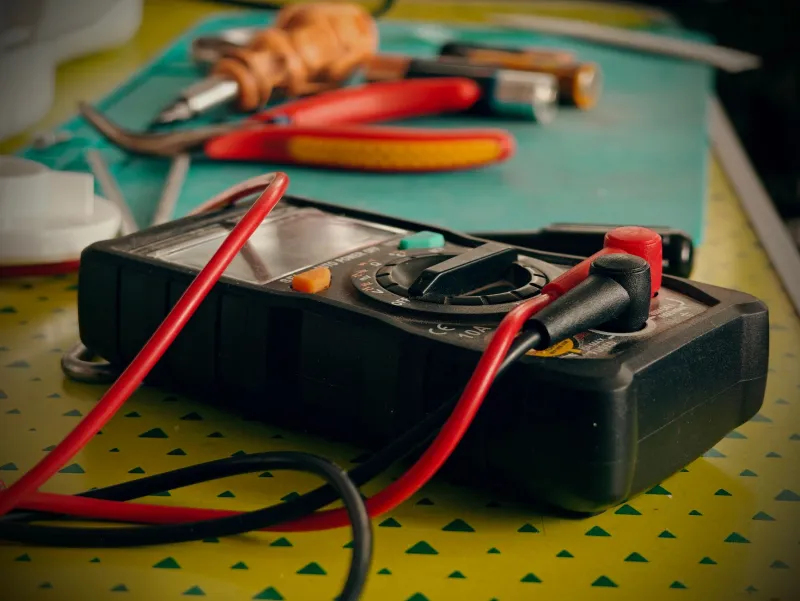
We picked up 12 of the most popular budget wireless chargers available on Amazon right now, all priced between $8 and $22, all claiming between 10W and 15W of output. We wired each one up to a USB power meter on the input side and used a modified phone case with a shunt resistor to measure what was actually being delivered to the coil. Then we ran two-hour charging sessions and logged the curves. The results were not pretty.
The Gap Between the Box and the Bench
Let's start with the headline number. Of the 12 chargers we tested, only three consistently hit within 10 percent of their advertised wattage during peak charging. Four hovered in the 50 to 65 percent range. Two never cleared 5W regardless of what phone we used — which means they were essentially standard Qi speed dressed up in a fast-charge costume.
The best performer was a $16 unit from a brand we'd never heard of that somehow managed 13.8W sustained on a Samsung Galaxy S23. The worst was a $11 pad claiming 15W that plateaued at 6.2W within four minutes and never recovered. We cracked it open afterward. More on that in a minute.
Why Wireless Charging Loses So Much Power in the First Place
Before we pile on the manufacturers, it's worth understanding the physics here. Wireless charging is inherently less efficient than a wired connection. You're transferring energy through an air gap using electromagnetic induction, and that process has real losses baked in.
A well-designed 15W wireless charger might pull 20 to 22W from the wall to deliver 15W to your phone. That's a system efficiency of around 68 to 75 percent — not great, but acceptable. The problem with budget chargers isn't that they're inefficient by nature. It's that they're cutting corners that make them more inefficient than they need to be, and then lying about the output number to compensate.
The three main culprits we found across our test batch: coil quality, thermal management, and the driver IC.
Coil Quality: You Get What You Pay For
The transmitter coil is the heart of any wireless charger. Better coils use tighter winding tolerances, higher-grade copper, and ferrite backing to focus the magnetic field. Budget versions often use thinner wire, looser windings, and either minimal or no ferrite shielding.
When we desoldered the coils from four of our worst performers and measured their DC resistance, we found values ranging from 1.8 to 3.1 ohms. The better-performing units came in under 0.9 ohms. That resistance difference directly translates to heat and wasted power. You're paying for watts that turn into warmth in the coil instead of charge in your battery.
Coil misalignment makes this worse. Most budget pads have no alignment guide — no magnet ring, no LED indicator, nothing. If your phone is even 5mm off-center, efficiency can drop by another 15 to 20 percent. We tested this deliberately by shifting phones incrementally and watching the power meter drop in real time. At maximum misalignment on a 90mm coil, two of our test units cut output in half.
Thermal Throttling: The Silent Killer
This one surprised us the most. Seven of the 12 chargers showed significant thermal throttling — meaning they started at a higher wattage and then deliberately reduced power output as the unit heated up. That's actually the correct behavior from a safety standpoint, but it's being used to justify misleading specs.
The box says 10W. The charger hits 9.8W for about 90 seconds. Then it gets warm, throttles to 6W, and stays there for the rest of the session. Technically, it touched 10W. Practically, your phone is charging at 6W for two hours.
The unit we cracked open — the one that plateaued at 6.2W — had no heatsinking whatsoever. The driver IC was mounted directly to a thin PCB with no thermal pad, no copper pour, nothing. Under our thermal camera, it was hitting 74°C within three minutes. The throttling wasn't a bug; it was the only thing keeping that chip from cooking itself.
The Driver IC Situation
Speaking of driver ICs: this is where the real cost-cutting happens. A proper fast-charge wireless IC — something like an IDT P9242 or a Xiaomi-grade equivalent — costs real money. Budget chargers often substitute with generic ICs that support Qi baseline but have limited current handling, poor thermal feedback loops, and no support for proprietary fast-charge protocols like Samsung's 15W or Apple's 7.5W MagSafe mode.
If you're using an iPhone and you want 7.5W wireless charging, you need a charger that's MFi certified or at least running the right protocol stack. Most of the $10-range pads we tested defaulted to 5W Qi on iPhones no matter what the box claimed. That's a significant real-world difference — roughly 40 extra minutes to a full charge.
Which Budget Models Actually Performed
We're not going to name every model we tested because stock changes constantly and the same listing often ships different hardware in different batches. What we can tell you is what to look for.
The three top performers in our test all shared a few traits: they had a visible ferrite backing on the coil (you can often see it through the bottom of the pad), they ran noticeably cooler than the others, and their input current draw was higher — around 1.8 to 2.1A at 9V — which tells you the adapter is actually pushing power instead of just pretending to.
The worst performers had thin, lightweight coils, ran hot within minutes, and in two cases had input power meters that barely moved past 8W total draw — which means there was simply no way they were delivering 10W to the phone even with perfect efficiency.
Practical Tips for Buying Better
If you're shopping for a budget wireless charger and want one that actually performs, here's what to check:
- Weight it. Heavier usually means more ferrite and better coil construction. A 10W pad shouldn't weigh 28 grams.
- Check the input adapter rating. A 15W wireless charger needs at least a 15W adapter — ideally 18W to account for losses. If the included adapter is a 5W brick, the 15W claim is fiction.
- Look for a USB power meter reading above 12W at the wall. If your charger is pulling less than that, it's not delivering 10W to your phone.
- Feel the heat after five minutes. A little warmth is fine. If it's uncomfortable to touch, it's throttling.
- Skip the chargers with no brand presence. Not because no-name is always bad, but because brands with a support channel have more to lose from bad reviews.
The Bottom Line
Budget wireless charging is genuinely viable — but only if you buy smart. The technology isn't magic, and the laws of physics don't care what's printed on the packaging. A few extra bucks spent on a unit with proper coil construction and thermal management will charge your phone faster, run cooler, and last longer than the cheapest thing on the shelf.
At Cheap5V, we're all about getting the most performance per dollar. Sometimes that means spending $16 instead of $9. In wireless charging, that seven-dollar gap is currently the difference between a charger that works and one that's basically decorative.