That Bag of Capacitors You've Had Since 2021 Might Already Be Dead
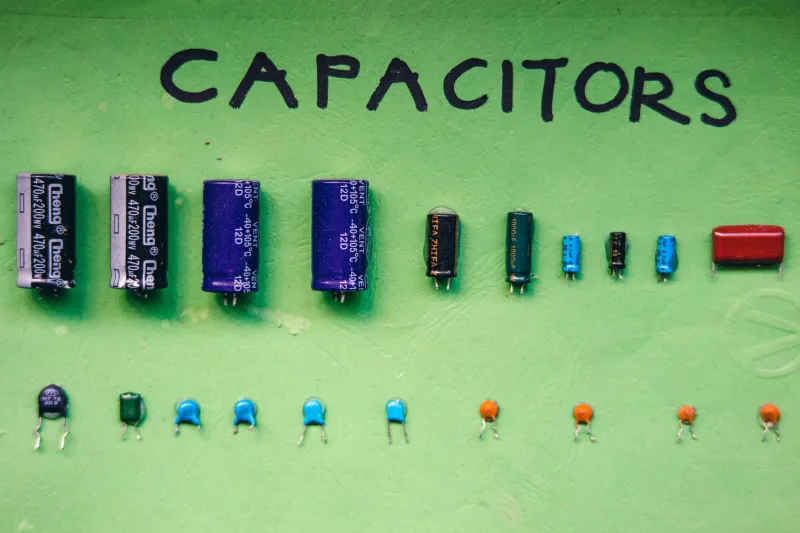
You bought a 200-piece electrolytic capacitor assortment back when you were on a component-hoarding kick. It cost you maybe $8 shipped, you used a handful of them for a project, and the rest went into a zip-lock bag that's been sitting in your parts drawer ever since. Good deal, right?
Maybe not. Here's the uncomfortable truth: electrolytic capacitors have a shelf life, and depending on how they were stored — and how long ago you bought them — a significant chunk of that bag might already be operating well outside spec. This isn't just theoretical. It shows up in real builds, in vintage gear repairs, and in maker projects that mysteriously misbehave for no obvious reason.
Let's talk about why this happens, what it actually costs you, and how to figure out whether your old stock is worth using.
What's Going On Inside an Electrolytic Cap
Unlike ceramic or film capacitors, electrolytics are wet components. They rely on a liquid or gel electrolyte — usually an aluminum oxide layer that forms on the anode foil — to do their job. That oxide layer is what gives them their capacitance, and here's the catch: it needs to be periodically reformed by applying voltage. Without that, it slowly degrades.
Sit a cap on a shelf for three years with no voltage across it, and that oxide layer starts to thin. When you finally drop it into a circuit, the capacitor draws a higher-than-normal current as it tries to reform the layer on its own. In a robust circuit with a gentle power-up, it might actually recover. In a circuit that slams it with full voltage immediately, it might bulge, vent, or just silently fail to do its job.
And that's before we even talk about the electrolyte itself evaporating over time — a process that happens even through a sealed aluminum can, just slowly.
Capacitance Loss and ESR Creep: The Two Killers
When an electrolytic ages — whether from use, heat, or just time — two things happen in parallel, and both are bad.
Capacitance drops. A cap rated at 100µF might measure 85µF, or 70µF, or worse. For bypass and decoupling applications, a 20% drop might be tolerable. For timing circuits, audio filters, or power supply smoothing stages, it can shift behavior enough to cause real problems. A switching power supply that starts getting noisy output ripple is often running with degraded filter caps — either on the primary or secondary side.
ESR climbs. Equivalent Series Resistance is the internal resistance of the capacitor, and it's supposed to be low. A healthy 1000µF electrolytic might have an ESR of 0.05 to 0.2 ohms. An aged one might hit 1 ohm, 5 ohms, or higher. High ESR is often more damaging than capacitance loss because it causes the cap to dissipate power as heat during operation, which accelerates further degradation in a nasty feedback loop. High-ESR caps in power supplies generate ripple, cause voltage instability, and in extreme cases, physically fail.
This is exactly why so many vintage electronics — old CRT monitors, early 2000s desktop PSUs, classic audio gear — fail in predictable ways as they age. The caps go first, and they go quietly.
The "New Old Stock" Problem
Here's where it gets tricky for the budget builder. A lot of cheap component assortments sold on Amazon or through no-name sellers on eBay and AliExpress aren't freshly manufactured. They're often old stock that's been sitting in a warehouse — sometimes overseas — for years before it reaches you. You buy it thinking you're getting new parts, but you might be getting caps that are already two to four years into their degradation curve.
There's generally no way to know just by looking. The date codes on cheap caps are often absent, inconsistent, or outright faked. A cap that looks perfect — no bulging, no visible leakage, no discoloration — can still have measurably higher ESR than it should.
This matters a lot when you're doing repair work. Swapping out a failed cap in an old piece of equipment with an equally old cap from your parts drawer isn't really a repair — it's just moving the timeline on the next failure.
How to Actually Test What You've Got
The good news: testing capacitors isn't hard if you have the right tools, and those tools are cheap.
A basic LCR meter will measure capacitance and sometimes ESR. You can find decent units for $15–$25 that are more than adequate for bench work. Compare your measured capacitance against the rated value — anything more than 20% low is suspect, especially for new-ish stock.
A dedicated ESR meter is the more useful tool for evaluating cap health. Some LCR meters include ESR measurement; others don't. Standalone ESR meters start around $20 and are worth having if you do any repair work at all. Cross-reference your readings against published ESR specs for the capacitor's value and voltage rating — a quick search will turn up reference tables.
The formation trick — sometimes called "reforming" — involves slowly bringing old caps up to their rated voltage through a current-limiting resistor over a period of hours. It can genuinely recover some borderline caps by rebuilding the oxide layer. It's worth trying on old caps before using them in critical applications, especially if they've been sitting for years.
When to Just Toss Them
Honestly? For anything power-related — voltage regulators, switching supplies, DC-DC converters — don't cheap out with old stock. The cost of a fresh set of quality electrolytics from a reputable distributor is almost always less than the time you'll spend debugging a misbehaving circuit that turns out to have a marginal cap at the root of the problem.
For low-stakes applications — blocking caps in audio circuits, non-critical timing apps, prototyping where you're just testing a concept — old stock that tests within 10-15% of spec is probably fine. But if you're building something that's going to run unattended, power other components, or go into someone else's hands, fresh parts are the right call.
At Cheap5V, we're obviously fans of not spending more than you have to. But there's a difference between buying affordable components and recycling degraded ones. A bag of fresh electrolytics from a known distributor — even if it's just a 50-pack of common values — will cost you less than $10 and give you a baseline you can actually trust.
The Takeaway
Capacitors are passive. They don't move. They don't make noise. They sit there looking completely fine while quietly drifting out of spec, and they'll keep doing it until something in your circuit starts behaving strangely or fails outright.
That drawer full of bulk caps you've accumulated over the years? Worth auditing. Pull out the LCR meter, check a sample from each bag, and be honest with yourself about what you're working with. The parts that pass can go back in rotation. The ones that don't belong in the trash, not in your next build.
Your future self — the one who isn't spending a Saturday debugging a power supply that should have worked — will thank you.