Always-On and Always Draining: The Hidden Cost of Leaving Cheap Wall Adapters Plugged In
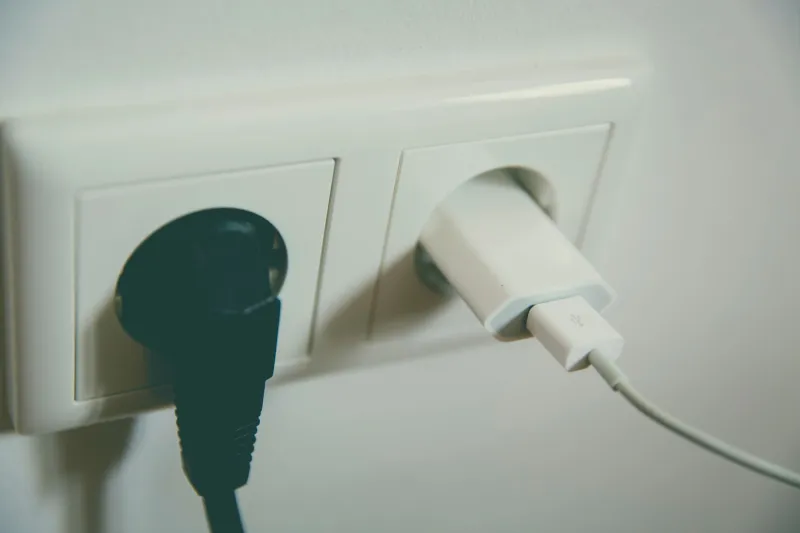
You bought a five-pack of wall adapters for eleven bucks. Smart move, right? Cheap power for your workbench, your Raspberry Pi shelf, your LED strips. But here's something nobody puts on the product listing: those adapters are still drawing power at 2 AM when everything is off and you're sound asleep. It's called phantom load — or standby power, or idle draw, depending on who you ask — and for budget power supplies, it can be surprisingly nasty.
We grabbed a handful of cheap wall adapters and power supplies from the usual suspects (Amazon listings, AliExpress bundles, the kind of stuff that shows up in bulk packs) and hooked each one up to a Kill A Watt meter with nothing connected on the output side. No load. Just the adapter sitting in the wall, doing nothing. What we found ranged from "mildly annoying" to "genuinely inexcusable."
What Is Phantom Load, Exactly?
Every switching power supply has to do some amount of work just to stay alive. The internal oscillator keeps running, the control circuitry stays active, and the transformer keeps cycling — all so the supply is ready to deliver power the instant you plug something in. That baseline activity burns electricity, and on a well-designed modern adapter, it should be nearly invisible: less than 0.1 watts, ideally.
The problem is that hitting sub-100mW no-load consumption costs money in component quality and engineering time. Budget adapters skip corners. Older transformer designs, cheap controller ICs, and minimal filtering all push that idle number up. We've seen no-load draws as high as 0.8 watts on some of the worst offenders — which sounds tiny until you do the math.
The Numbers We Actually Measured
Here's a snapshot from our test bench. We're not naming specific sellers because these products churn through listings constantly, but these figures are representative of what you'll find in the budget tier:
- 5V/1A white cube adapter (generic, no-name): 0.71W no-load
- 5V/2A black adapter from a Pi accessory kit: 0.48W no-load
- 5V/2.4A "fast charge" adapter with folding prongs: 0.22W no-load
- 5V/3A USB-C adapter from a mid-tier brand: 0.09W no-load
- Older 5V wall wart with a barrel connector (linear design): 1.2W no-load
That linear design at the bottom of the list is a relic — if you've got old barrel-connector adapters from routers or external hard drives sitting in a power strip, pull them. They're basically space heaters.
Doing the Annual Math
Let's use the worst offender from our switching adapter lineup: 0.71 watts, running 24 hours a day, 365 days a year. That's about 6.2 kilowatt-hours annually. At the US average electricity rate of roughly $0.16 per kWh, you're looking at just under a dollar a year. Per adapter.
Okay, one dollar. Not exactly a financial crisis. But makers don't have one adapter. They have fifteen. They have a shelf of single-board computers, a row of bench supplies, a cluster of USB hubs, and a rat's nest of wall warts behind every piece of furniture in the house. Run those numbers at scale — say, ten adapters averaging 0.5W each — and you're burning 43.8 kWh a year for absolutely nothing. That's closer to seven bucks annually, and depending on where you live (California, New York, Hawaii — we see you), your per-kWh rate might be double the national average.
It also adds up thermally. That wasted power becomes heat, and heat in an enclosed space — say, a cabinet full of gear — means your other components are running warmer than they need to. Thermal stress is one of the quieter killers of cheap electronics.
How to Spot Your Worst Offenders Without a Kill A Watt
A Kill A Watt P4400 runs about $25 and is one of the most useful tools on any maker's bench. If you don't have one, get one — but in the meantime, you can do a rough triage by touch. Unplug all your devices and leave just the adapters in the wall for 30 minutes. Come back and feel them. An adapter that's warm to the touch with nothing connected is wasting meaningful power. An adapter that's completely cold is doing its job correctly.
Also look at age and design. Linear wall warts (the heavy, brick-shaped ones that get warm even when idle) are almost always worse than modern switching designs. Anything with a two-prong non-polarized plug from more than a decade ago is worth putting in a drawer and forgetting about.
The Kill-Switch Fix: Cheap and Effective
The easiest hardware solution is also the most obvious: a switched power strip. But not all power strips are created equal, and the ones with individual outlet switches are genuinely more useful than the single-master-switch variety. Look for strips that let you cut specific outlets while leaving others live — they're widely available for under $20 at hardware stores and on Amazon.
For a more DIY approach, here's a simple setup we use on the workbench: a smart plug (the kind that connects to your phone or a home automation hub) on a power strip that feeds everything non-essential. When you leave the bench, you kill the strip with a tap. Total cost for a decent smart plug: around $8-12 if you catch a sale. You can also schedule it — if you're never working after midnight, set it to cut power automatically. Your adapters can't drain what they can't access.
If you want to get fancier, a basic IoT relay board driven by an ESP8266 or similar microcontroller can automate the whole thing based on presence detection, time schedules, or even whether your main workbench PC is active. That's a full project on its own, but the core hardware costs less than five dollars.
The Bigger Picture
Phantom load isn't going to bankrupt you, but it's a real, measurable inefficiency — and for a community that cares deeply about getting the most out of every component, it's worth paying attention to. The fix is usually free (just unplug things) or cheap (a smart plug, a switched strip). The awareness is the hard part.
Next time you're evaluating a wall adapter, check if the listing mentions no-load power consumption. A good adapter will spec it out — look for values under 0.1W or compliance with the DOE Level VI efficiency standard, which is a real certification that limits standby draw. Budget adapters that hit Level VI are out there, and they don't necessarily cost more. You just have to know to look for it.
Your shelf full of cheap adapters is working for you. Make sure it's not also working against you at 3 AM when the whole house is dark.